A stealth mission built from scratch in Unreal Engine 5
Sneak through a Singapore canal district at night, find three hidden documents and reach the Pagoda Gate unseen.
007: First Light Level Recreation · In development
Overview
- A self-directed project: rebuild the core of 007: First Light in Unreal Engine 5 from scratch, then design an original stealth mission on top of it.
- The mission: Singapore, 2 a.m. Slip through Red Dragon's canal district, find the three documents that reveal the route to his pagoda, and reach the Pagoda Gate.
- A full stealth toolkit: silent takedowns, a gadget wheel, security cameras, guards with a readable detection meter, and props that can be turned against the enemy.
- Planned, scoped and tracked like a studio project, but run solo.
Role & Impact
- Solo designer covering level design, Blueprint scripting and animation set-up.
- Designed the mission structure, objectives and detection feedback, then built them in Blueprints.
- Scoped the project into milestones and decided what to build, what to cut, and in what order.
Problem
- Rebuilding a AAA reference alone is huge, and the risk is spending months on content that misses what makes the game feel good.
- Stealth only works if the player can read the rules: why a guard noticed them and what they can do about it. The challenge was deciding which systems define the experience and making them readable first.
What I Built
Prototype first
Every system was tested in a bare arena before it went into the level. Click any image to zoom.
Greybox to lit level
Drag the bar, or use the arrow keys, to scrub between before and after.
 Initial greyboxFinal greybox‹ ›
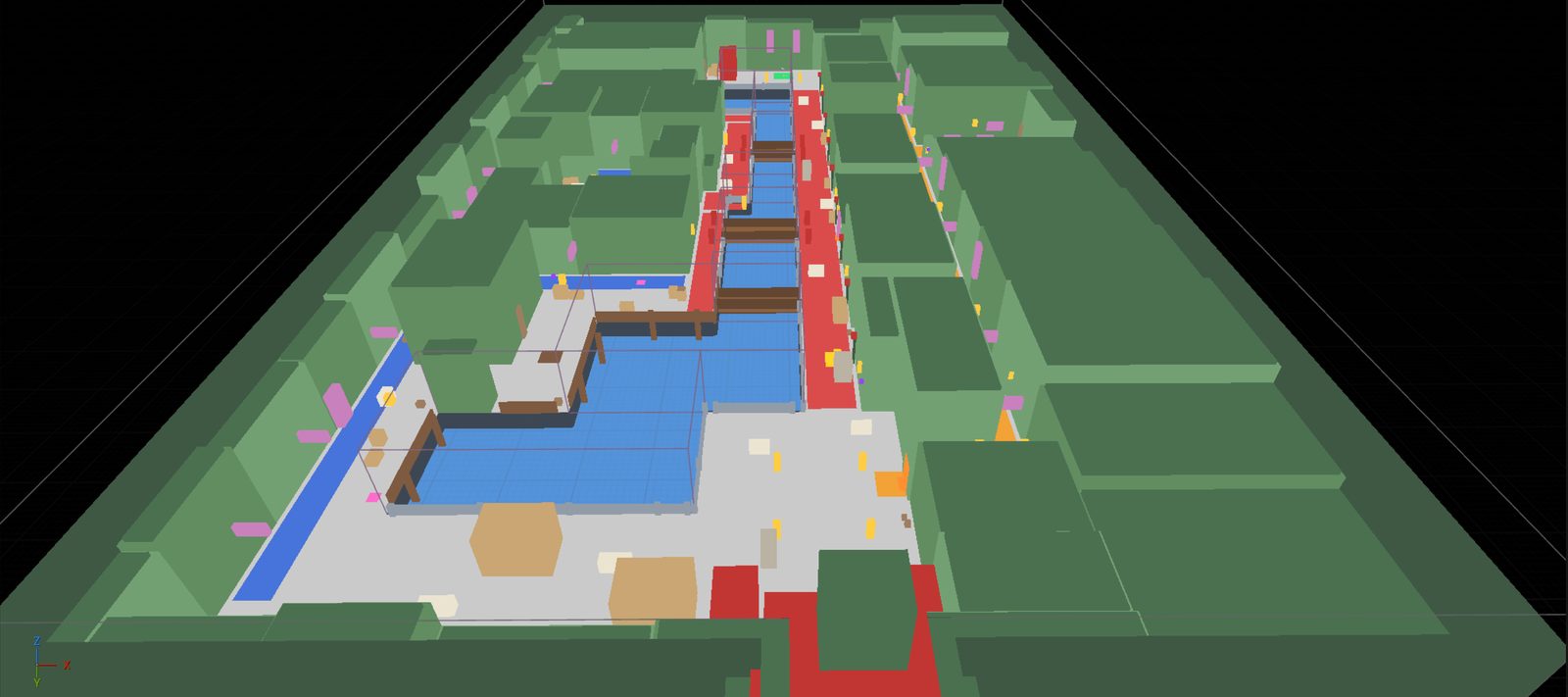
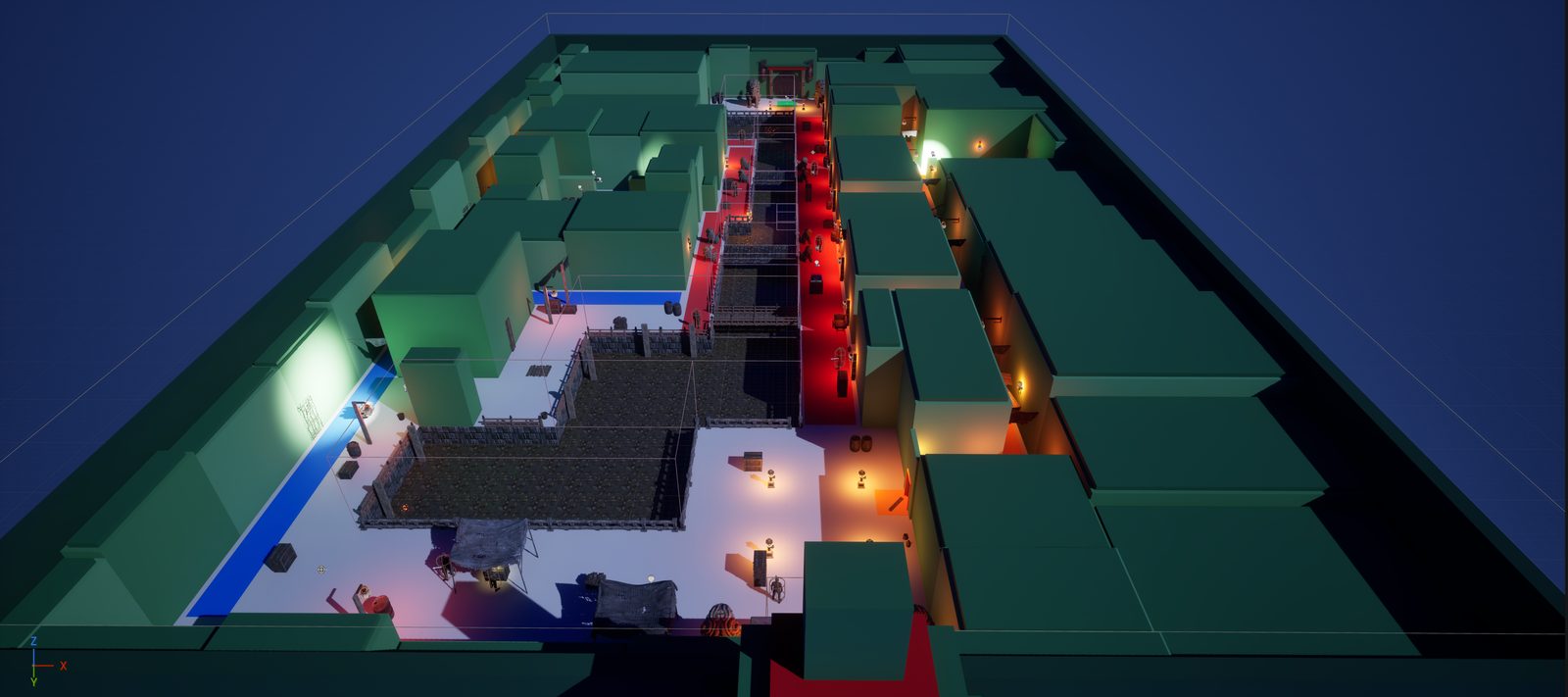
The whole canal district, top-down
The same footprint, first blocked out in flat colour and then lit for night. The route follows the water channel, and warm lamps along the red path pull the eye through the alleys without a single UI marker.
 GreyboxLit pass‹ ›
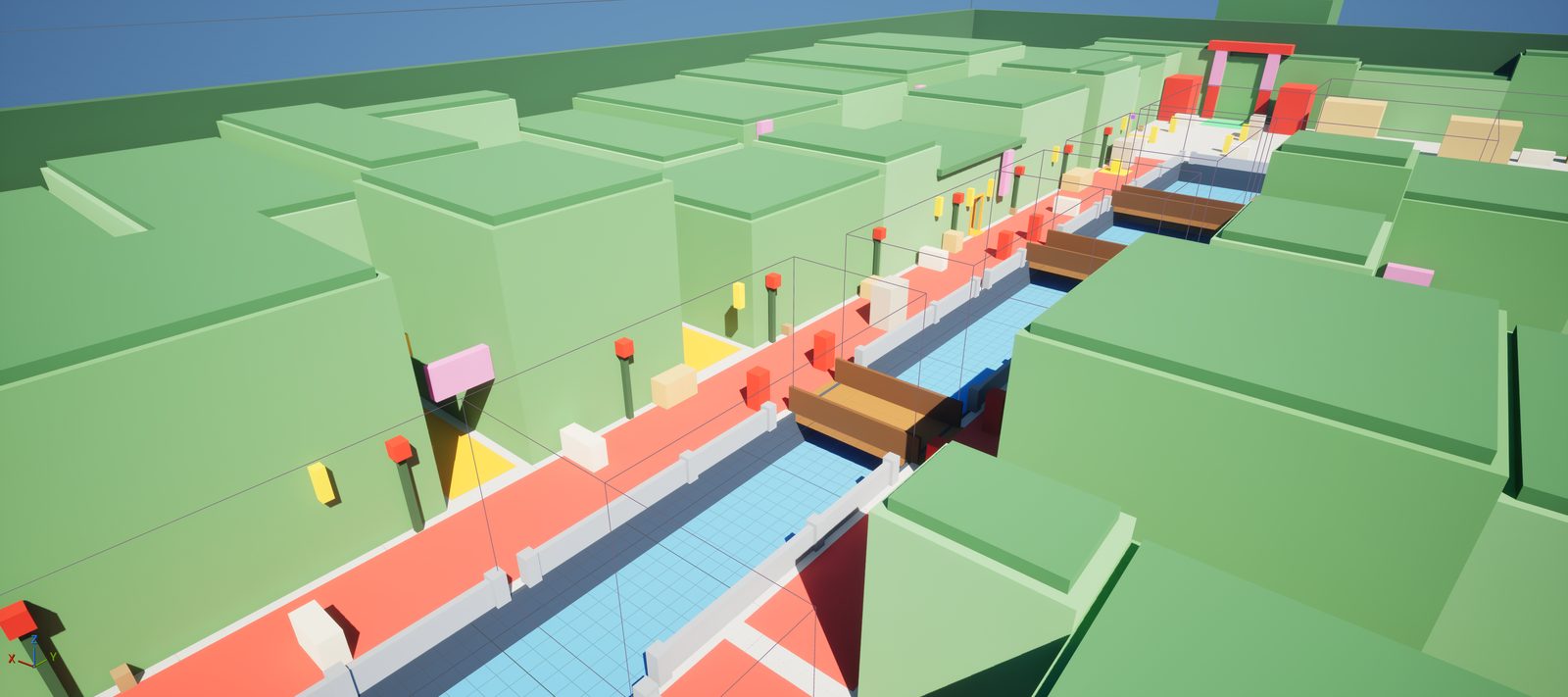
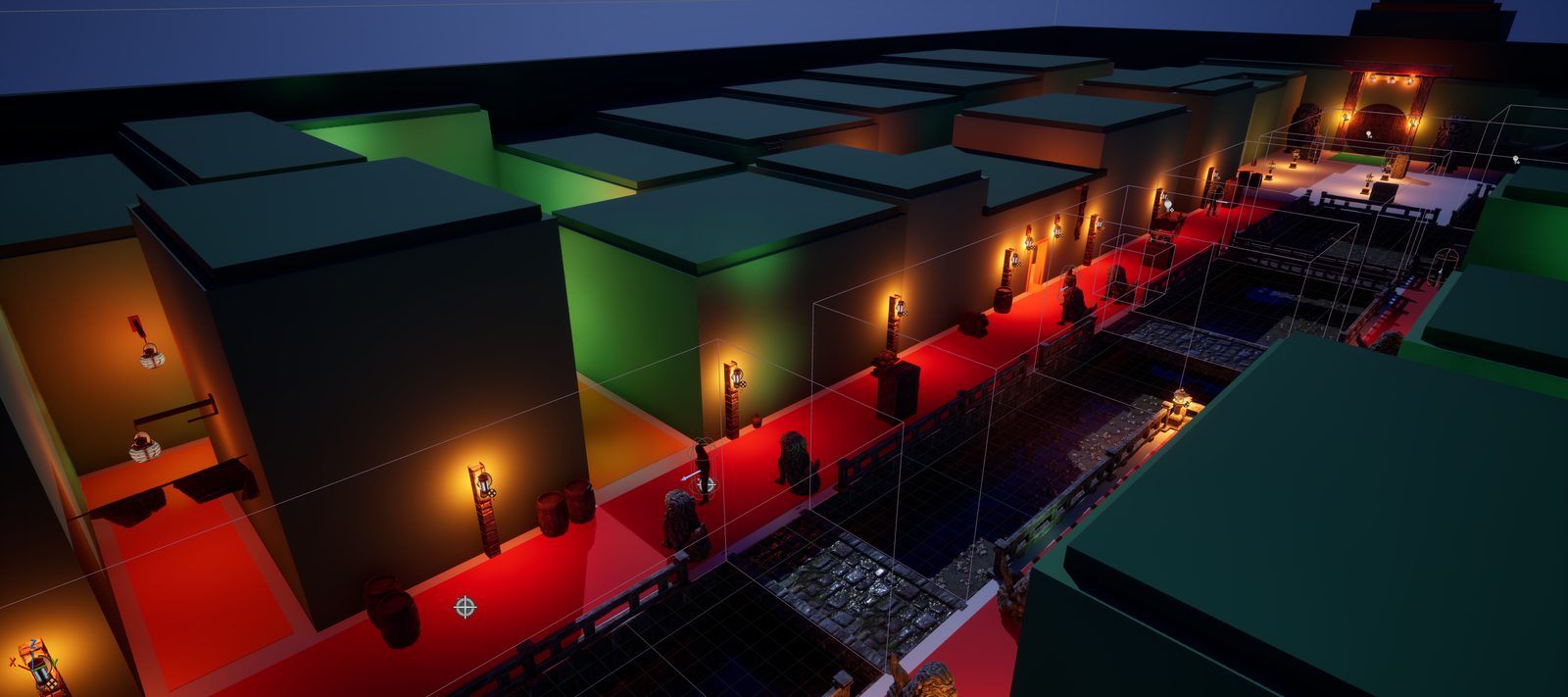
One stretch of the canal
A close look at a single stretch of canal: blocks and flat colour on one side, lighting and dressing on the other. Drag the bar to compare the same space as it moved from layout to atmosphere.
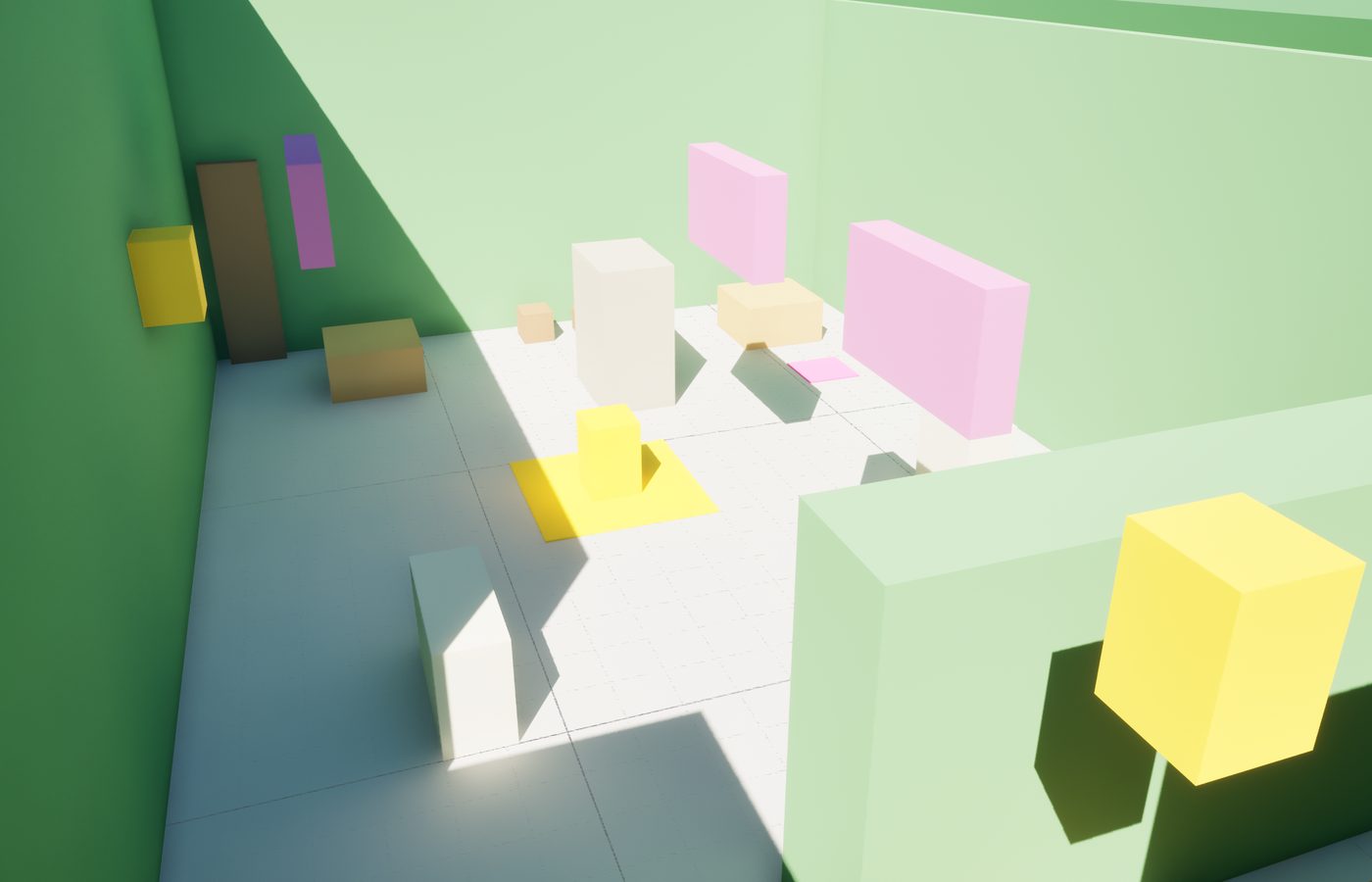
 GreyboxLit and dressed‹ ›
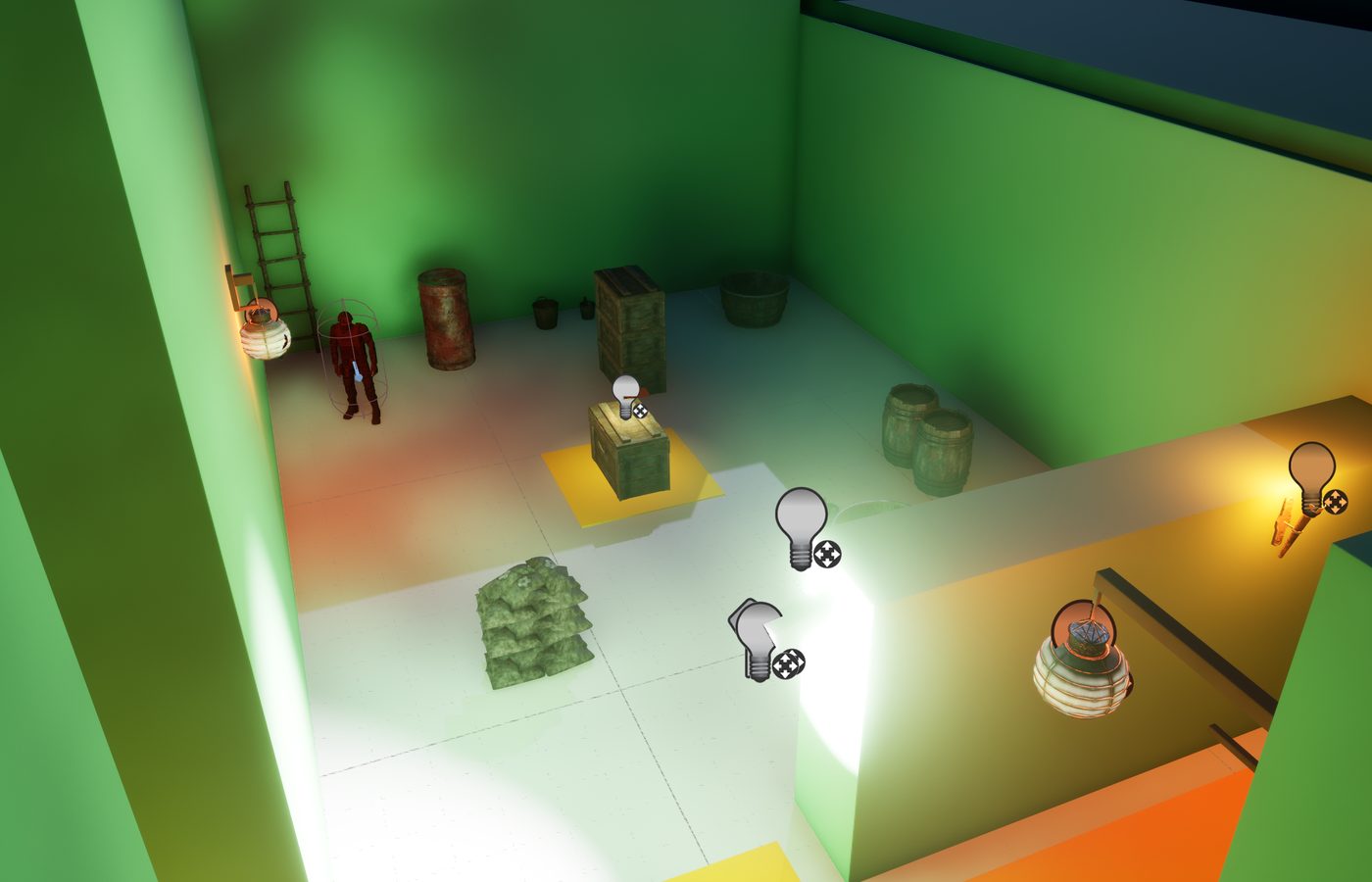
The first keycard spot
A room of plain coloured boxes becomes a place the player can read: lighting and props make the pickup the focal point of the room.
 Vision cones offVision cones on‹ ›
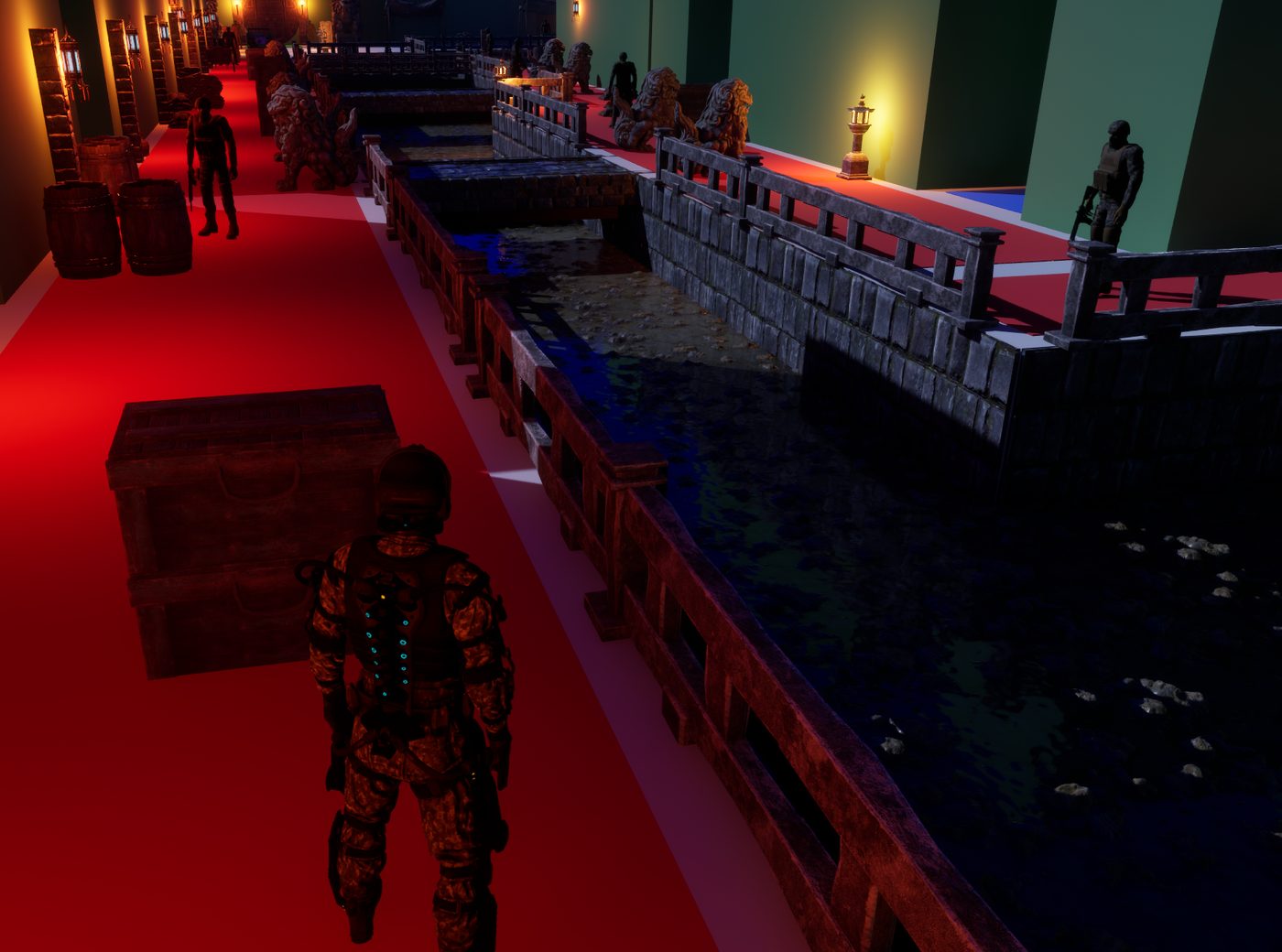
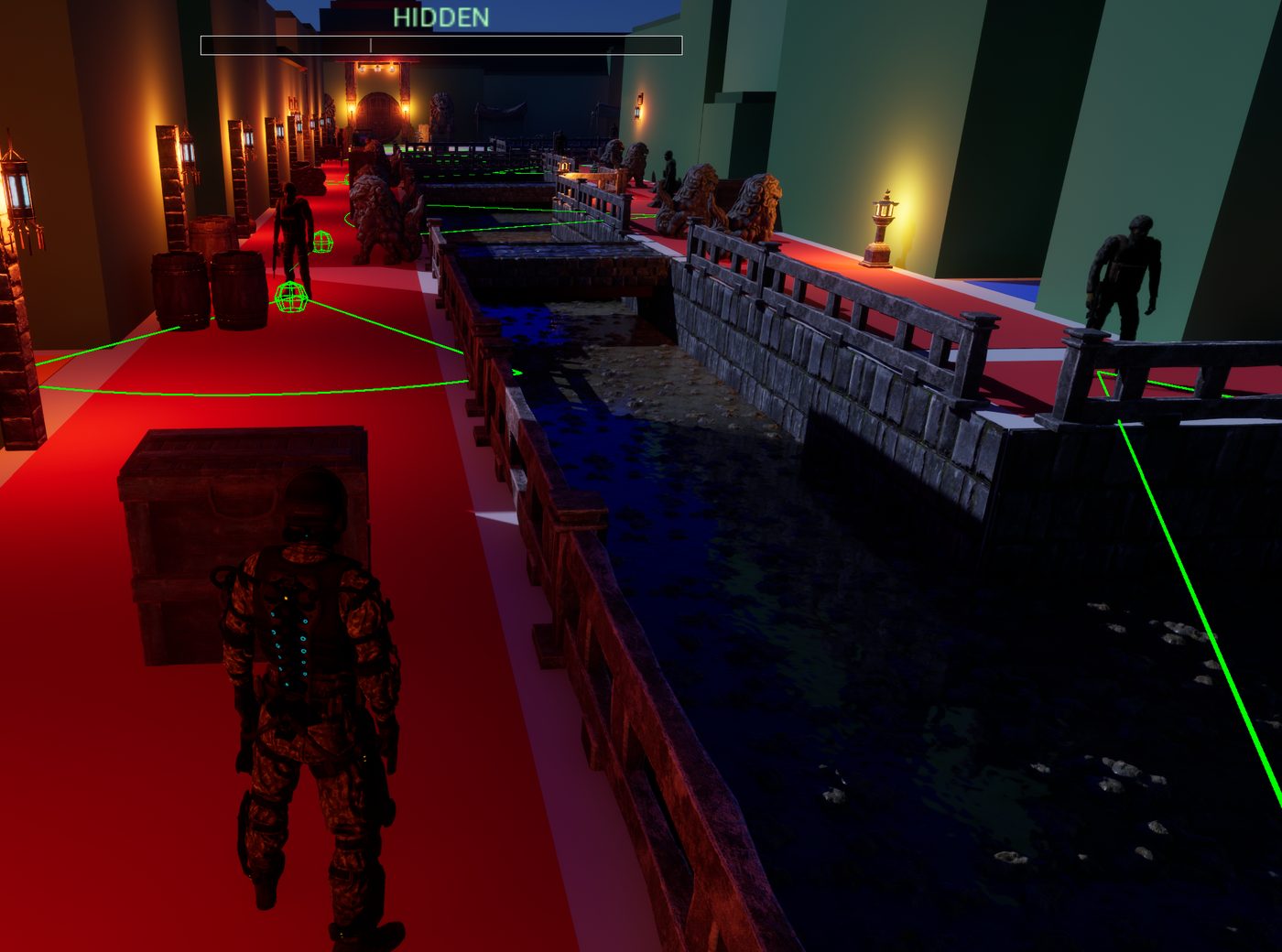
Seeing what a guard sees
Guard sight made visible. With the cones on, I can tune cover, timing and sightlines against what a guard can actually see, instead of guessing from the player's seat.
Systems in action
Eleven short clips of the working build. Pick one from the list; each has sound and its own controls.
Intro cutscene
A letterboxed intro sets the stage: Singapore, 2 a.m., Red Dragon's canal district, and a route to his pagoda split across three documents hidden in the alleys.
Story
Stealth and detection
Gadgets and props
Weapons
Mission flow
Under the hood
All gameplay is scripted in Blueprints. Click a graph to zoom in.
Stealth AI
Three guard types (armed, unarmed and a sentry) share detection logic and report to the Hidden to Alert meter.
World actors
Security cameras (horizontal and vertical), locked doors, a vault door, radios, steam valves and an explosive barrel, all scripted as reusable Blueprints.
Gadgets and loot
Flash mine, smoke pod, keycard and intel documents, each with its own prompt and behaviour.
Player and weapons
A weapon state machine (Relaxed, Raise, Aim, Lower) layered over locomotion in the animation graph, for a pistol and a rifle.
Blueprint library
Characters, weapons and gadgets
Cameras, doors, props and mission items
Scope control
Broke a huge reference into milestones and held the line on what to cut.
Self-direction
Set my own deadlines and reviewed my own builds like a producer would.
Prioritising feel
Core controls, detection and flow first, content second.
Improvements & Results
- Playable end to end The mission runs from the intro cutscene to the Pagoda Gate, not just isolated mechanics.
- Readable stealth A four-state detection meter and vision-cone debugging made guard behaviour easy to tune and easy for players to understand.
- Original mission A new mission and level that is mine, built on top of the recreated systems.
- Off-path reward A secondary hidden path rewards players who read the level.
- Greybox first Layouts were tested as greyboxes and a test arena before lighting and dressing, which kept changes cheap.
What I learned
Scope is a design tool. Recreating a big reference taught me to decide what matters most to the feel, build that first, and cut the rest. Level design is pacing and readability: a good level controls tension and rest, and a good stealth system always tells the player why something happened.