A food inspection game where appearances lie and the evidence decides
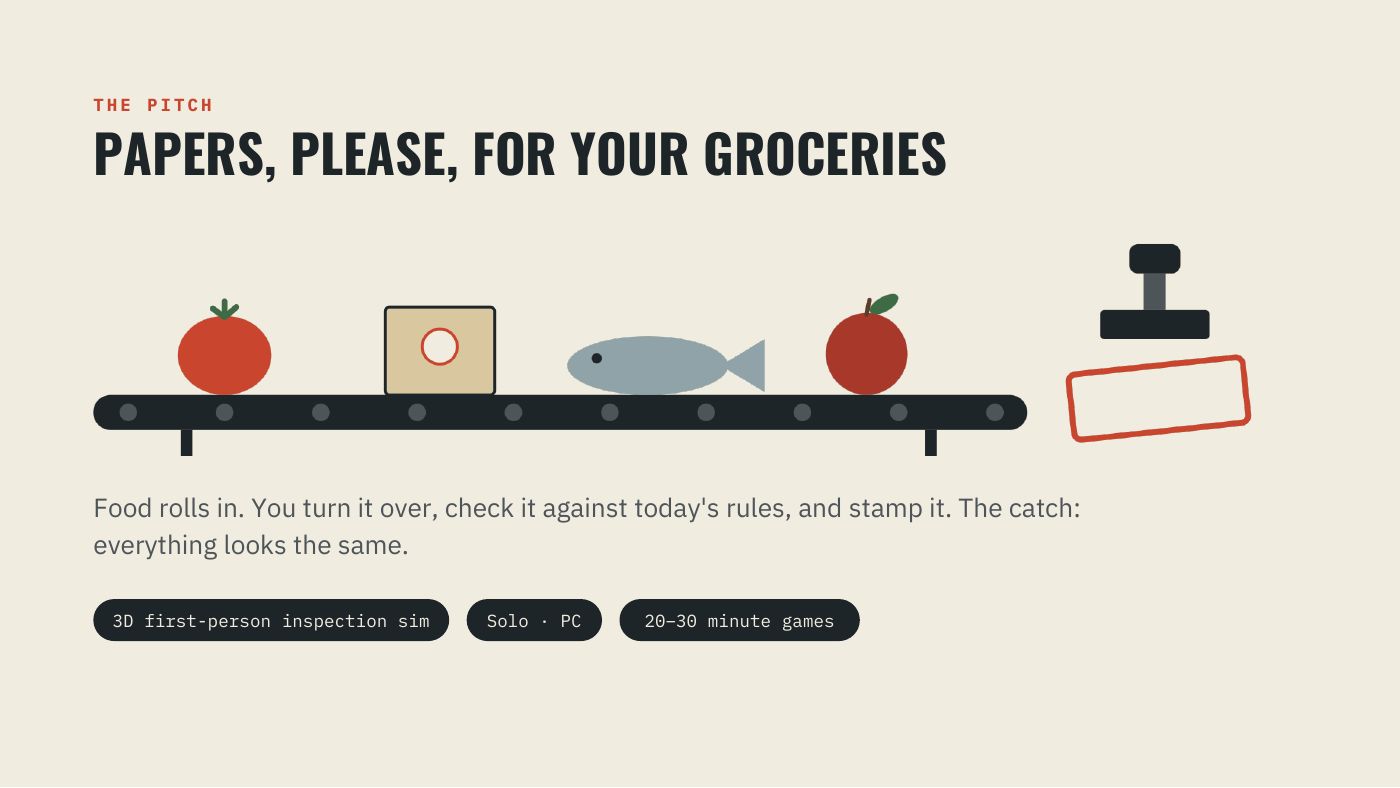
Papers, Please for your groceries: inspect, cross-check and stamp food using seals, manifests and the rulebook. A transformational game pitch that I took to a playable MVP in hours with AI, as a study of how it can support a designer's workflow.
Certified · Playable MVP
Overview
- Certified is a first-person food inspection game for PC, played in 20 to 30 minute sessions.
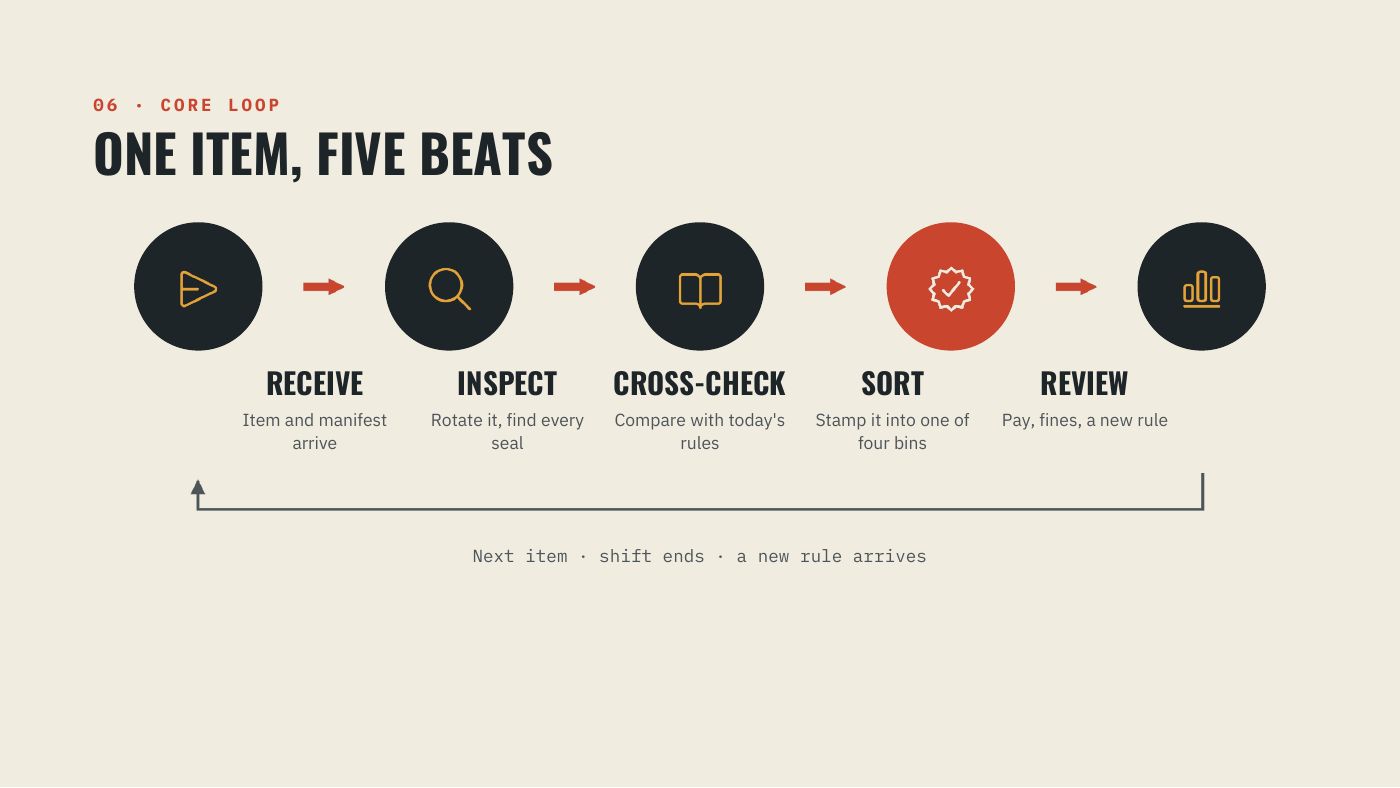
- Food rolls in on a conveyor. You turn each item over, check it against today's rules and stamp it Organic, Conventional, GM or Reject.
- It started as a transformational game pitch and became a playable MVP I could show to teammates.
Role & Impact
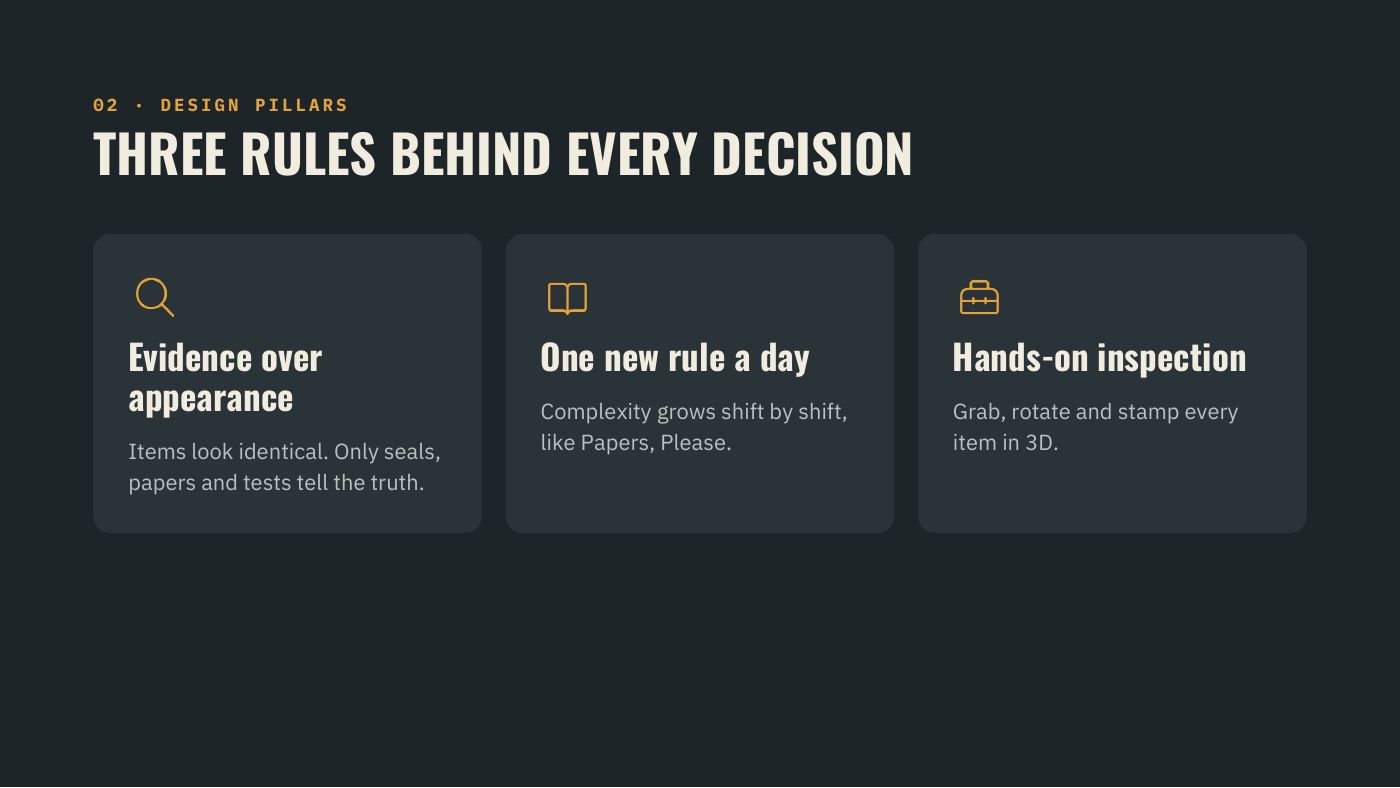
- I wrote the pitch: goals, design pillars, the facts we teach, the audience, the core loop and the five-day progression.
- For the MVP I directed AI-assisted development, reviewing each result against the pitch and deciding what was good enough to show.
Problem
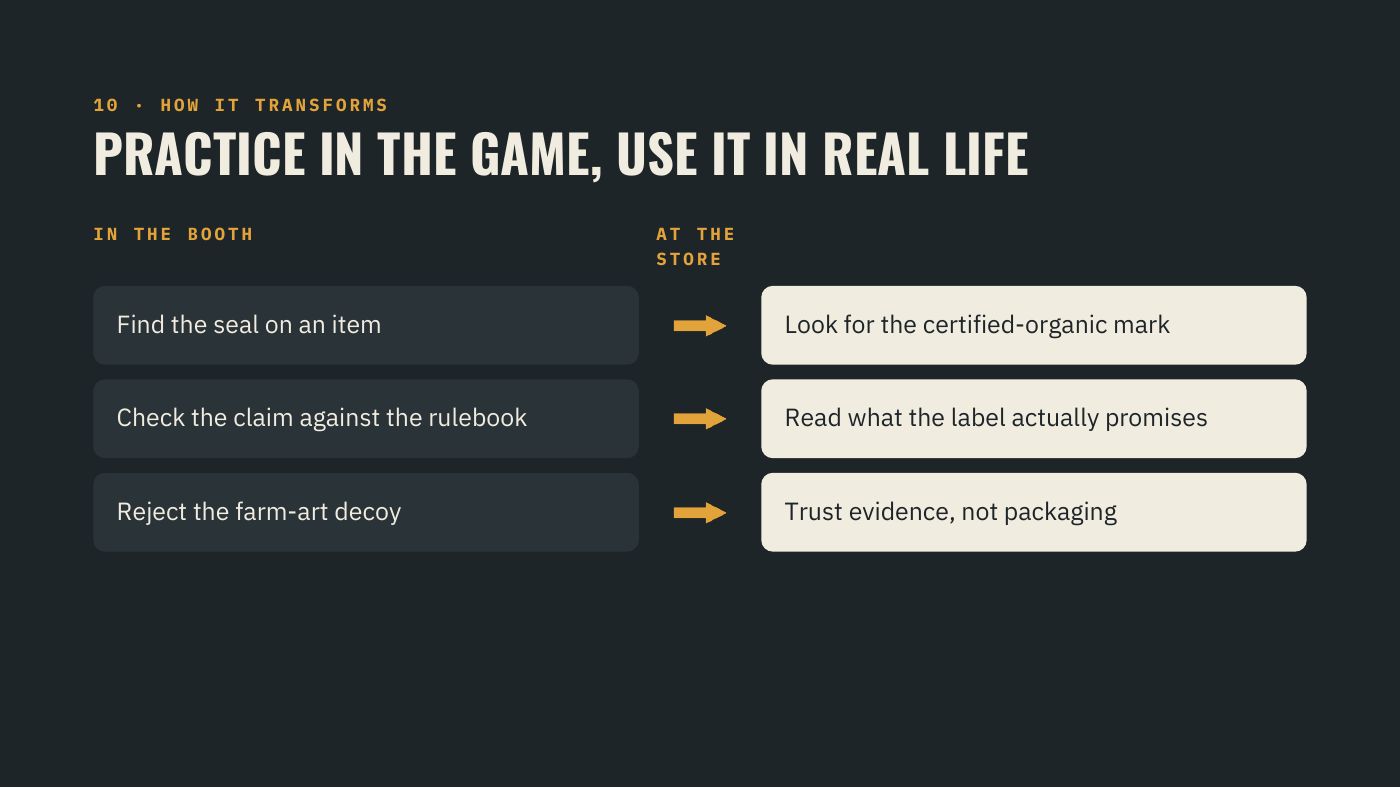
- How do you teach what a food label actually promises, so that players check the seal in real life?
- And how far can AI take an idea in a very short time, while the designer stays in charge?
What I Built
What the game teaches
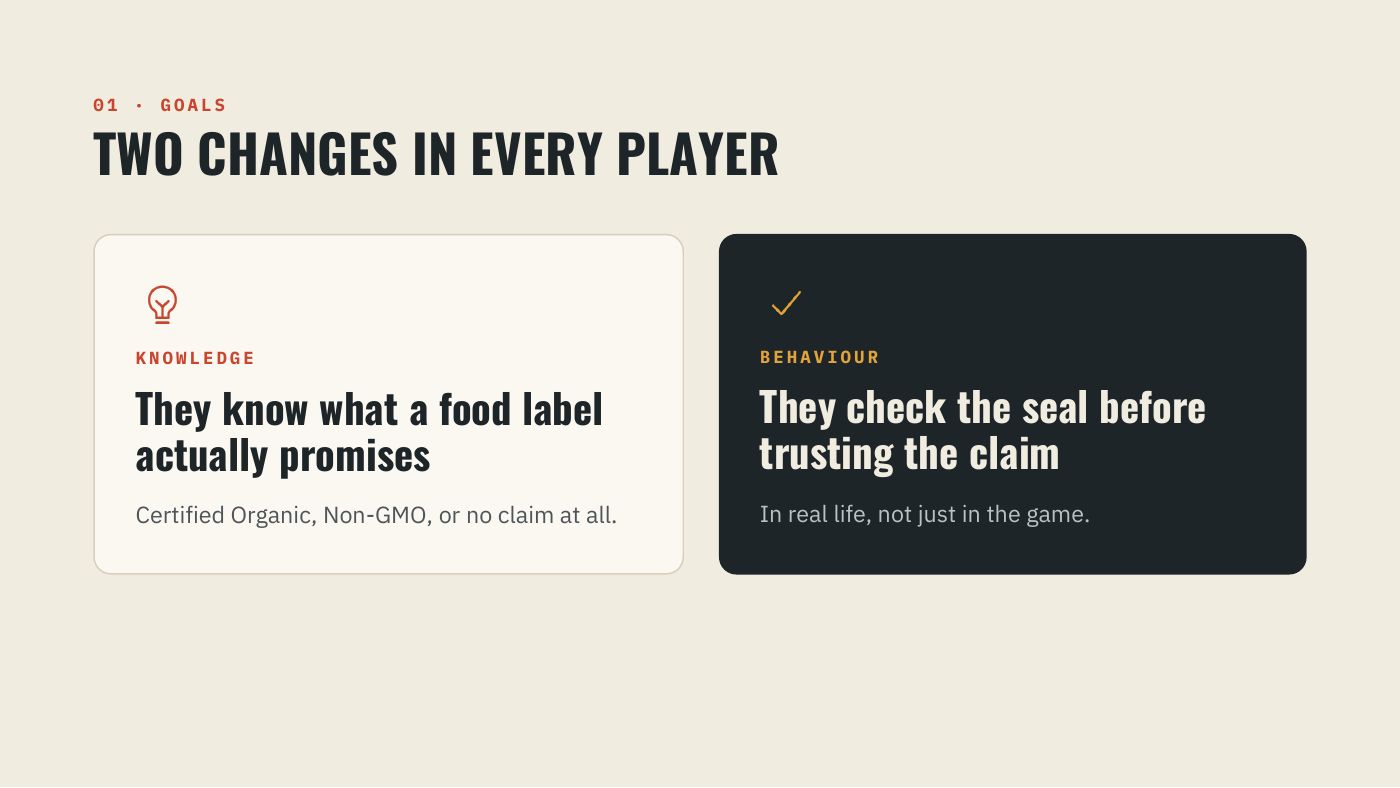
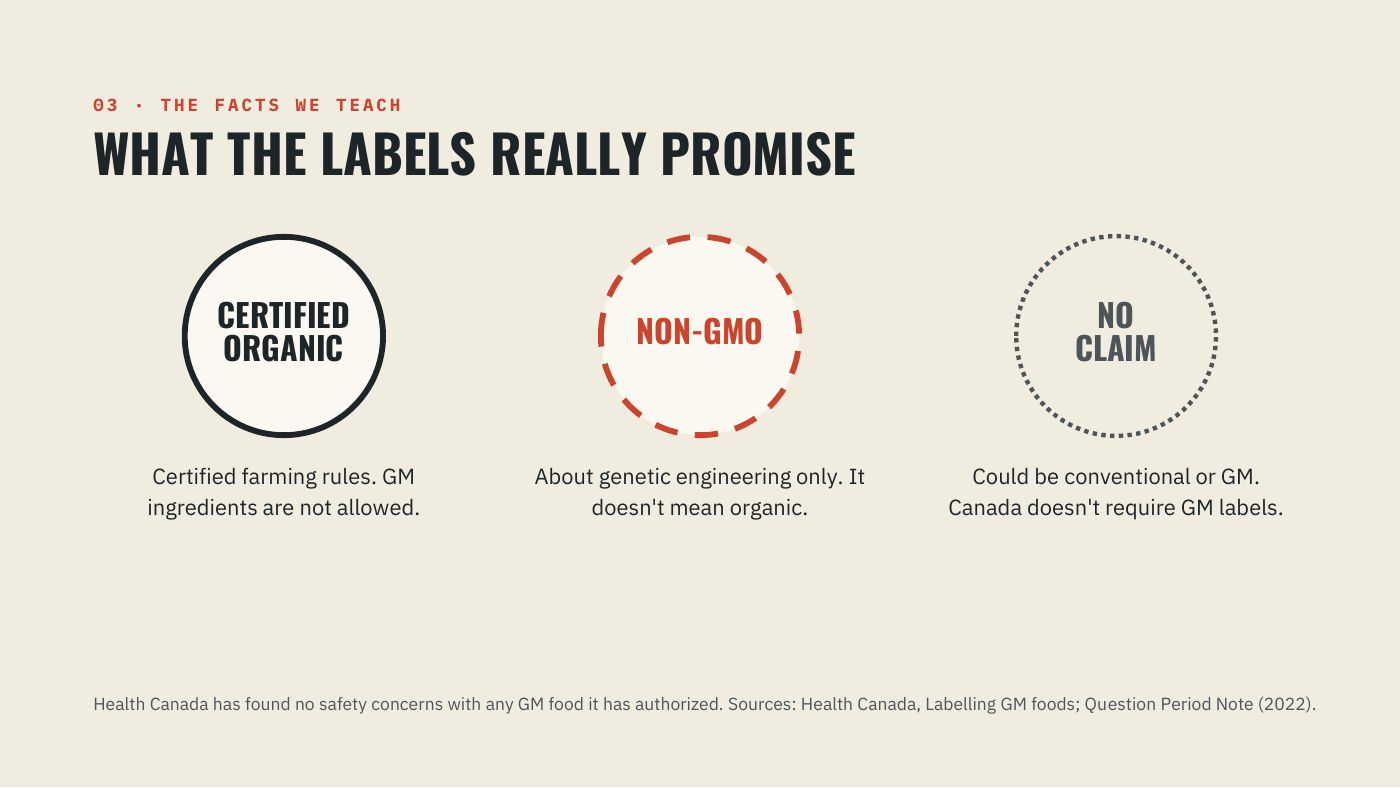
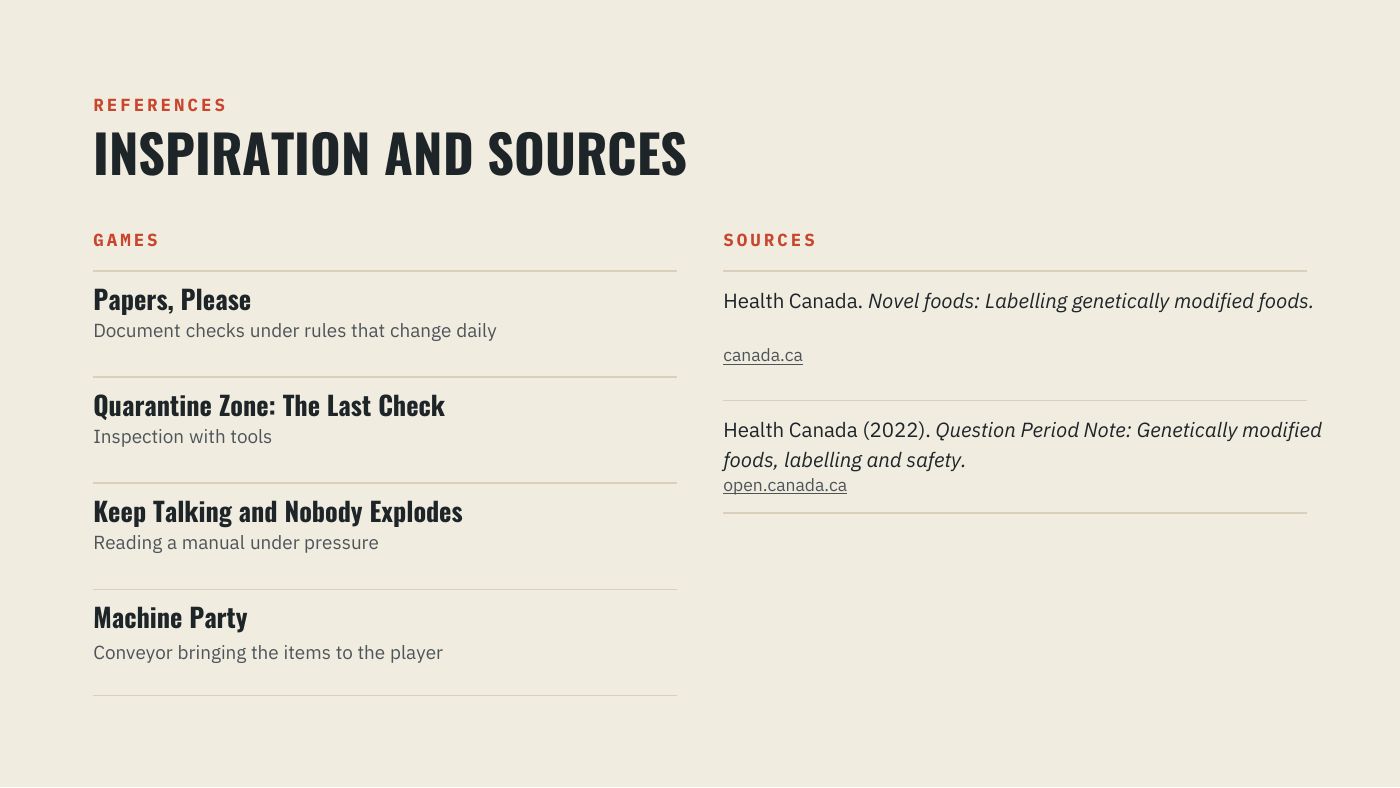
Two changes in every player, built around the three claims a shopper actually meets on a label. Facts come from Health Canada and the Canadian Food Inspection Agency; every brand, supplier and certificate in the game is fictional.
Designed against what players already believe
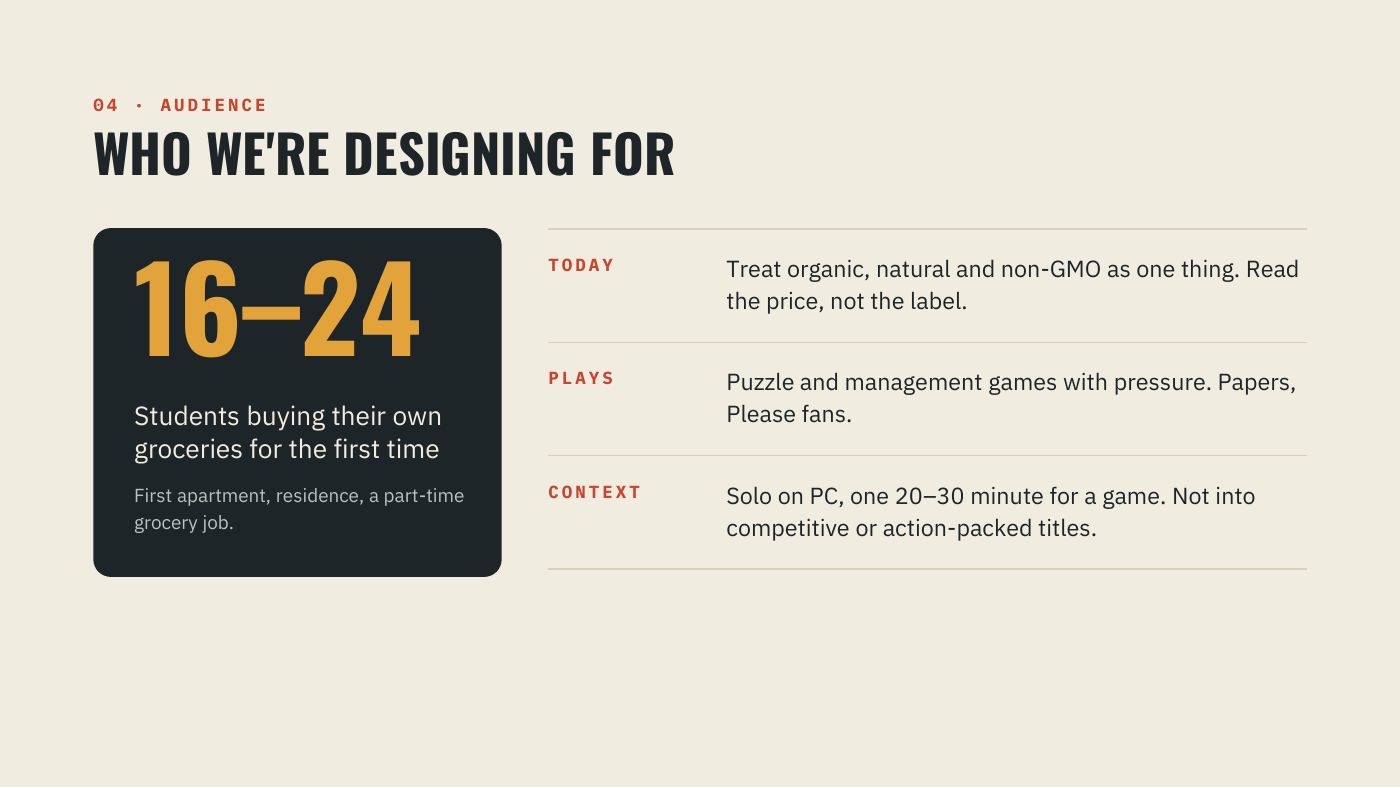
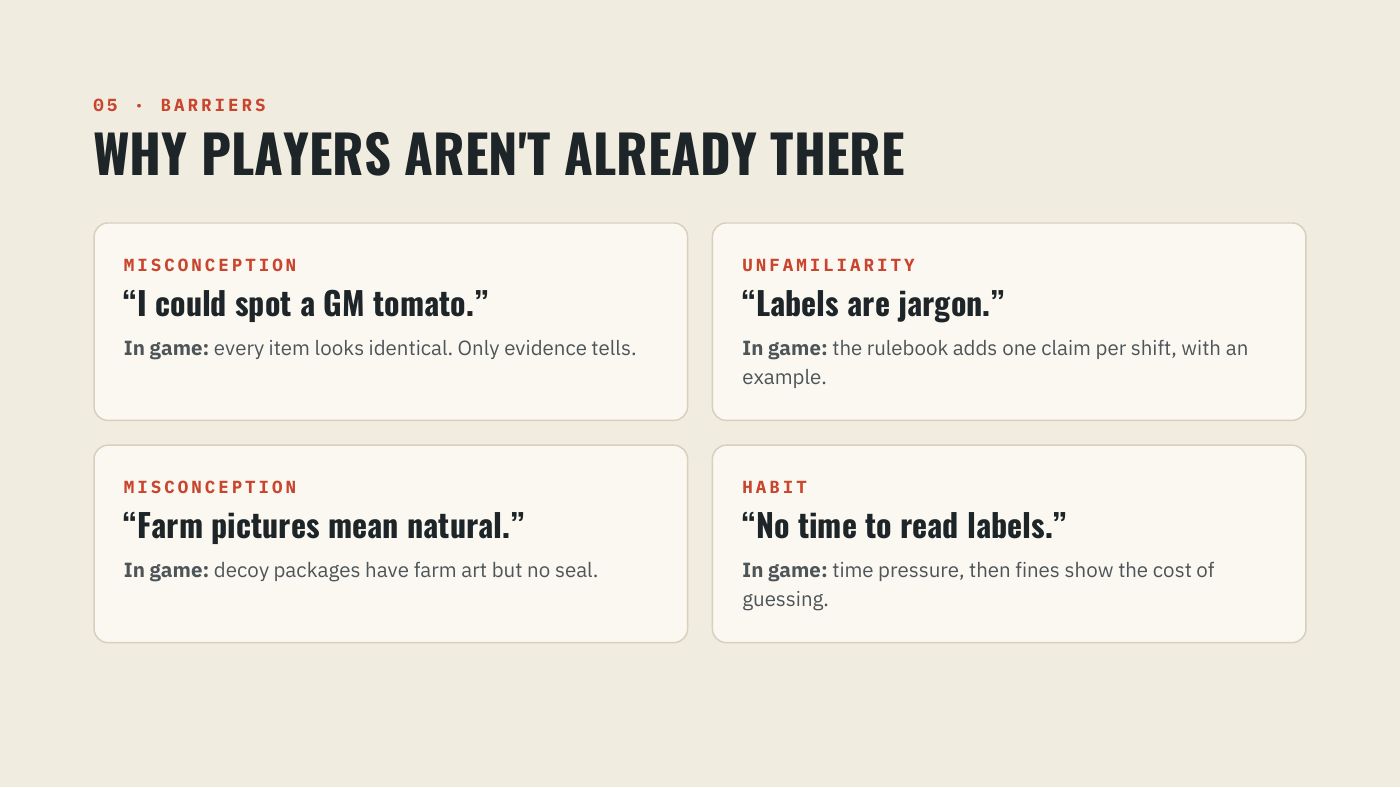
The audience is 16 to 24: students buying their own groceries for the first time, who like puzzle and management games with pressure. Each belief that keeps them from reading labels has an answer in the game.
One item, five beats
Every item runs the same loop, so the only thing that changes from day to day is the rule being tested.
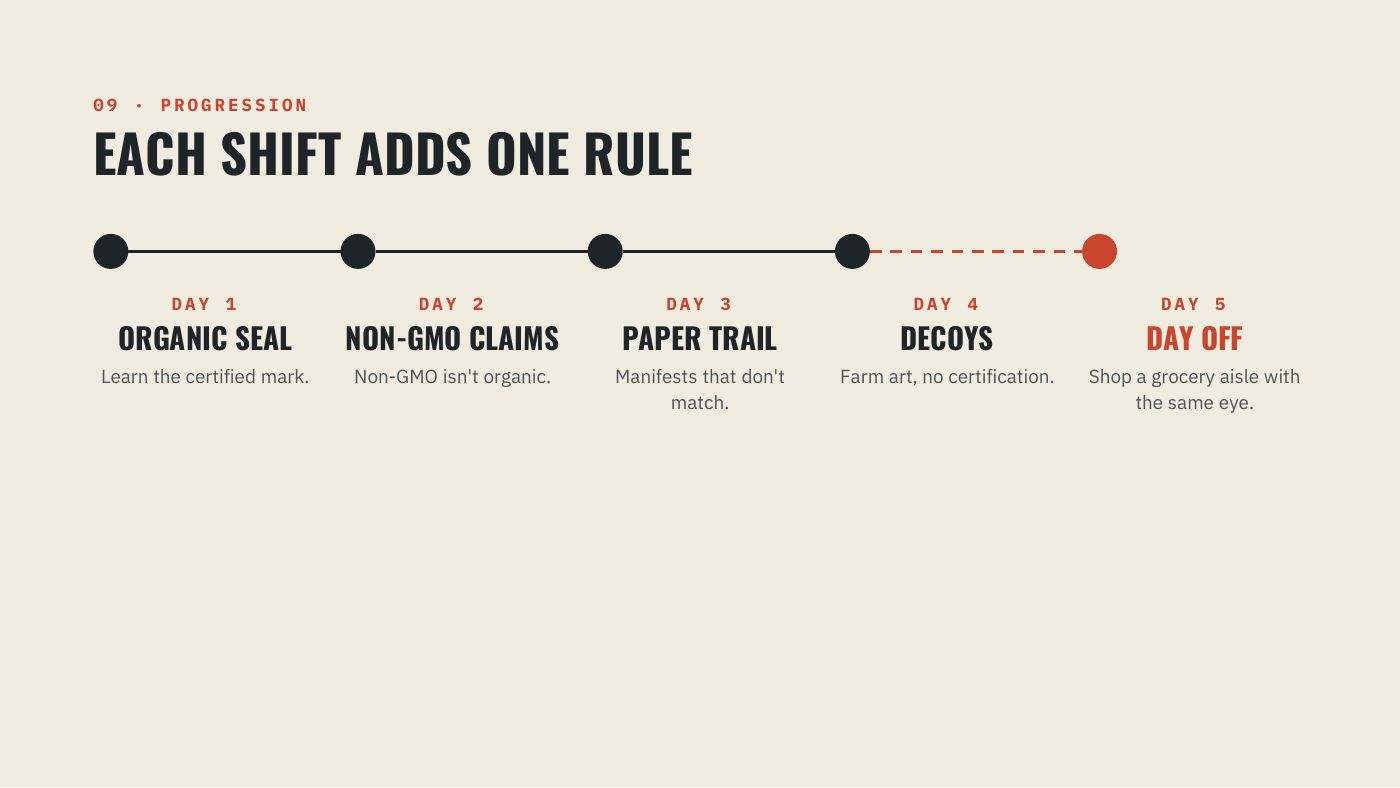
Each shift adds one rule
All five shifts are playable in the MVP. Click a day with a thumbnail to watch it.
A shift, start to finish
Every day teaches one thing
A day opens with a memo that introduces the day's rule and a sourced “Did you know?”. The shift is a timed run of inspections, and the end-of-shift report grades the player and explains every mistake.
- Memo: today's rule, plus a fact from the Canadian Food Inspection Agency
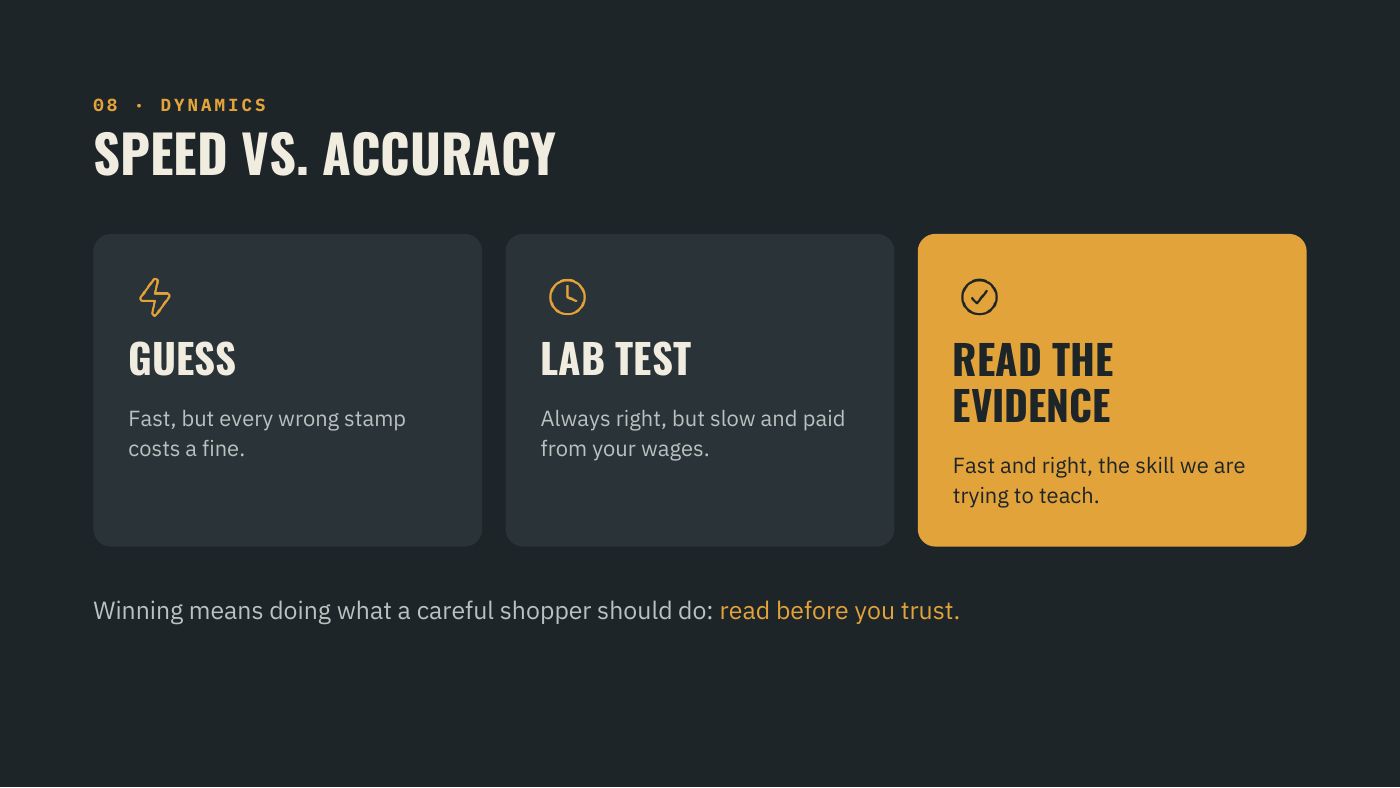
- Correct stamps pay $10, wrong ones cost a citation and a $5 fine
- Rent and groceries come out of the day's pay, so savings are a real stake
- The shift report names the item, the wrong stamp and the right answer
Title, memo and report
The rulebook
Look it up, don't memorise it
The rulebook sits on the desk and gains one page per day. Pages are short, use the same colours as the stamps and show the exact seal or claim being discussed.
- Day 1: the job, then the organic seal
- Day 2: GM and Non-GMO, and what a claim does not mean
- Day 3: the paper trail, with five clear reasons to reject
- Stamp colours match the text, so the right answer is easy to find under pressure
Rulebook pages
Building the booth
Simple shapes, readable evidence
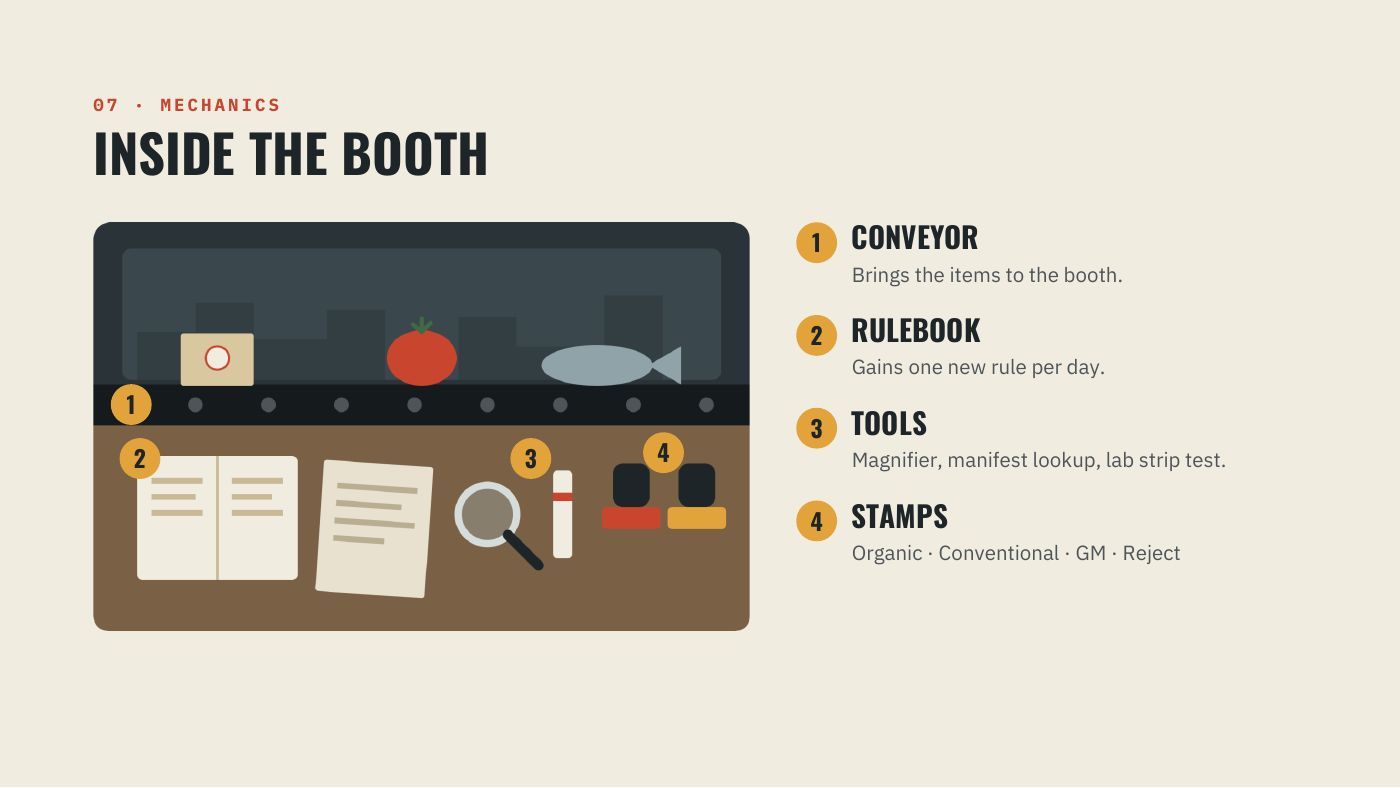
Everything on the desk is a simple low-poly model in Blender: produce, packages, the rulebook, the registry, a magnifier, the lab kit and the stamps. The shapes stay plain so the seals, lot numbers and paperwork are what a player looks at.
- Produce and packages share one low-poly style
- Tools on the desk map to the mechanics: magnifier, lab kit, registry, stamps
- Props are kept simple on purpose, so evidence stands out
Props in Blender
See it play
Three clips of the new mechanics, plus the full Day 1 shift at the top of the page. Each has sound and its own controls.
Day 2: the lab test
Non-GMO claims arrive, and so does the lab kit. When the variety line is smudged you can pay $5 and wait 20 minutes for a sure answer.
New rules, shift by shift
When it goes wrong
Where it started: the pitch deck
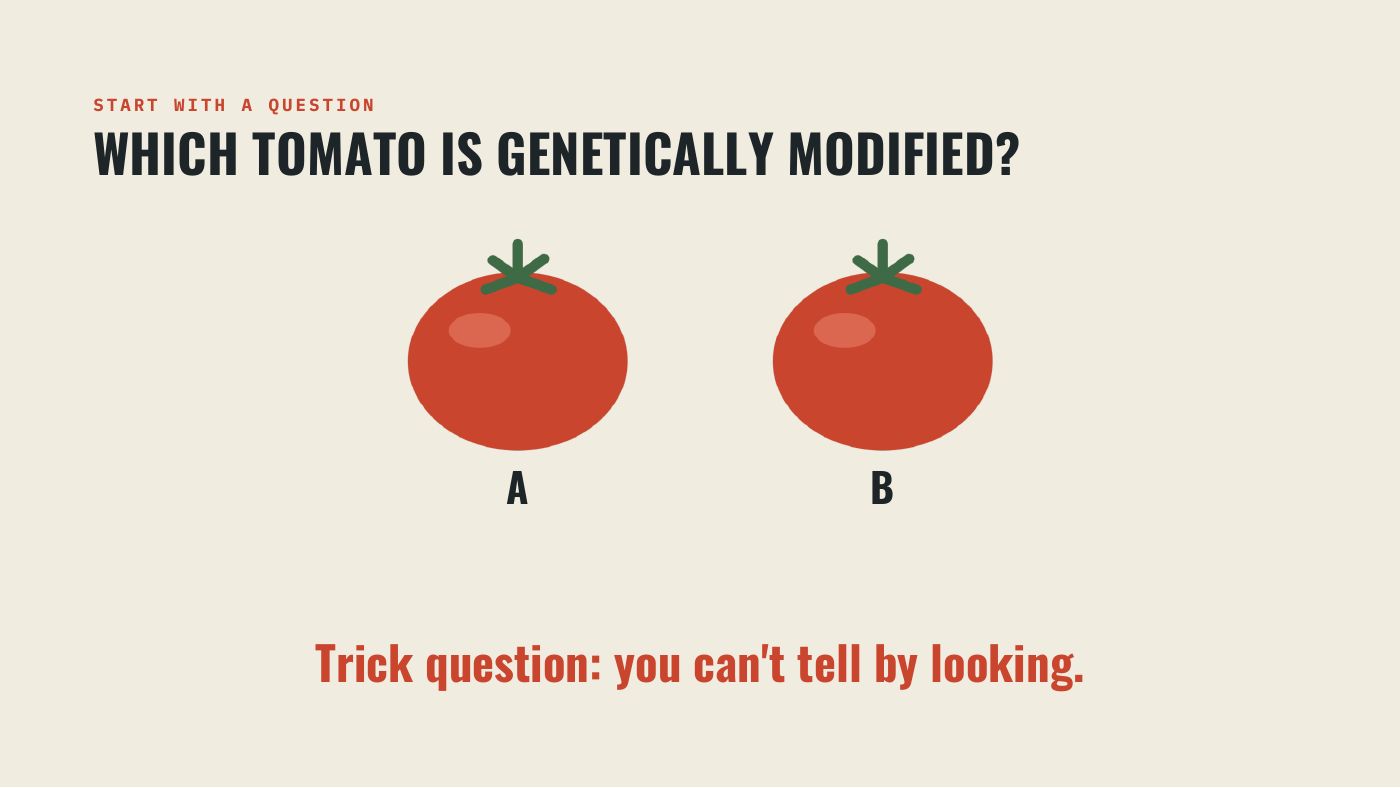
Certified began as a transformational-game pitch for class. The MVP follows the deck: the same goals, loop, stamps and day-by-day progression. Step through it, or open the PDF.

Title
A study in using AI to bring an idea to life
I built Certified to answer a question I'm curious about: how far can AI take a game idea in a very short time, and what does a person still have to do?
AI assisted the workflow. It did not replace the designer. It could only go fast because the design was already clear, and I still had to understand what it produced to direct it, check it and fix it.
That is the skill I wanted to practise: knowing how to use AI efficiently, and knowing enough to tell when its work is right. A build like this normally takes weeks. Here it took hours, and the time saved went into the part that matters: the design.
Design before the build
The pitch fixed the goals, rules and progression first, which is what made fast AI-assisted building possible.
Scoping for a showcase
Built the full five-shift progression, so teammates could play the whole arc from the first seal to the Day Off.
Reviewing, not just prompting
Judged every result against the pitch and learned enough about what AI produced to direct and correct it.
Improvements & Results
- Playtesting Test with the 16 to 24 audience to check that the rulebook teaches each claim without being memorised.
- Measuring transfer Check whether players look for the seal on real labels afterwards, which is the behaviour goal.
What I learned
AI makes building fast, but it does not make design decisions. The clearer the pitch, the better and faster the result, and the more I understood about what AI produced, the better I could direct it. A good design with clear rules can reach a playable MVP in hours, which means more time to test and refine the idea.